
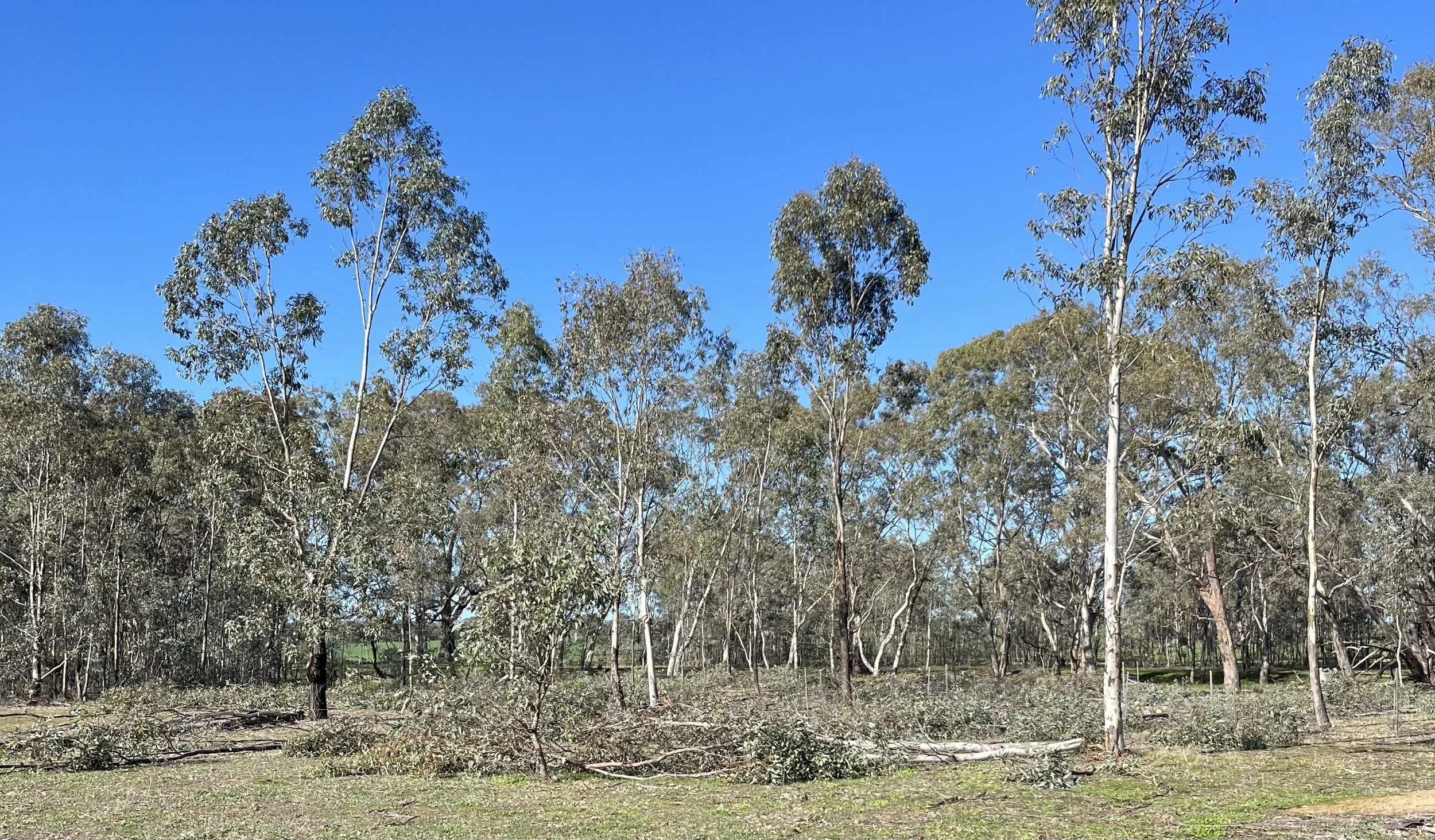
Selective vegetation management to improve woodland structure and habitat
Ecological Thinning for Healthier Woodlands
Ecological Thinning is the selective removal of competing trees and vegetation to improve the structure and condition of native woodland.
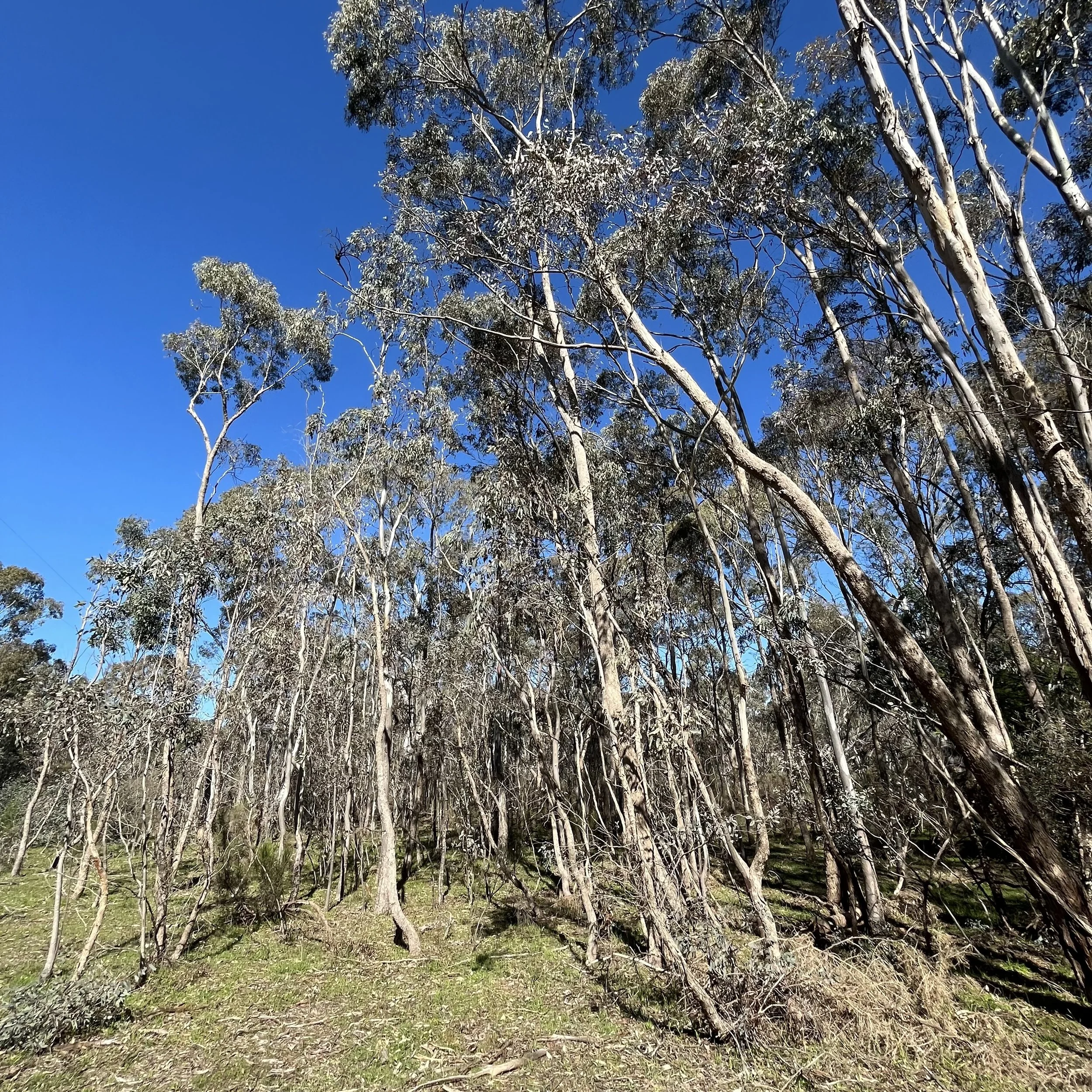
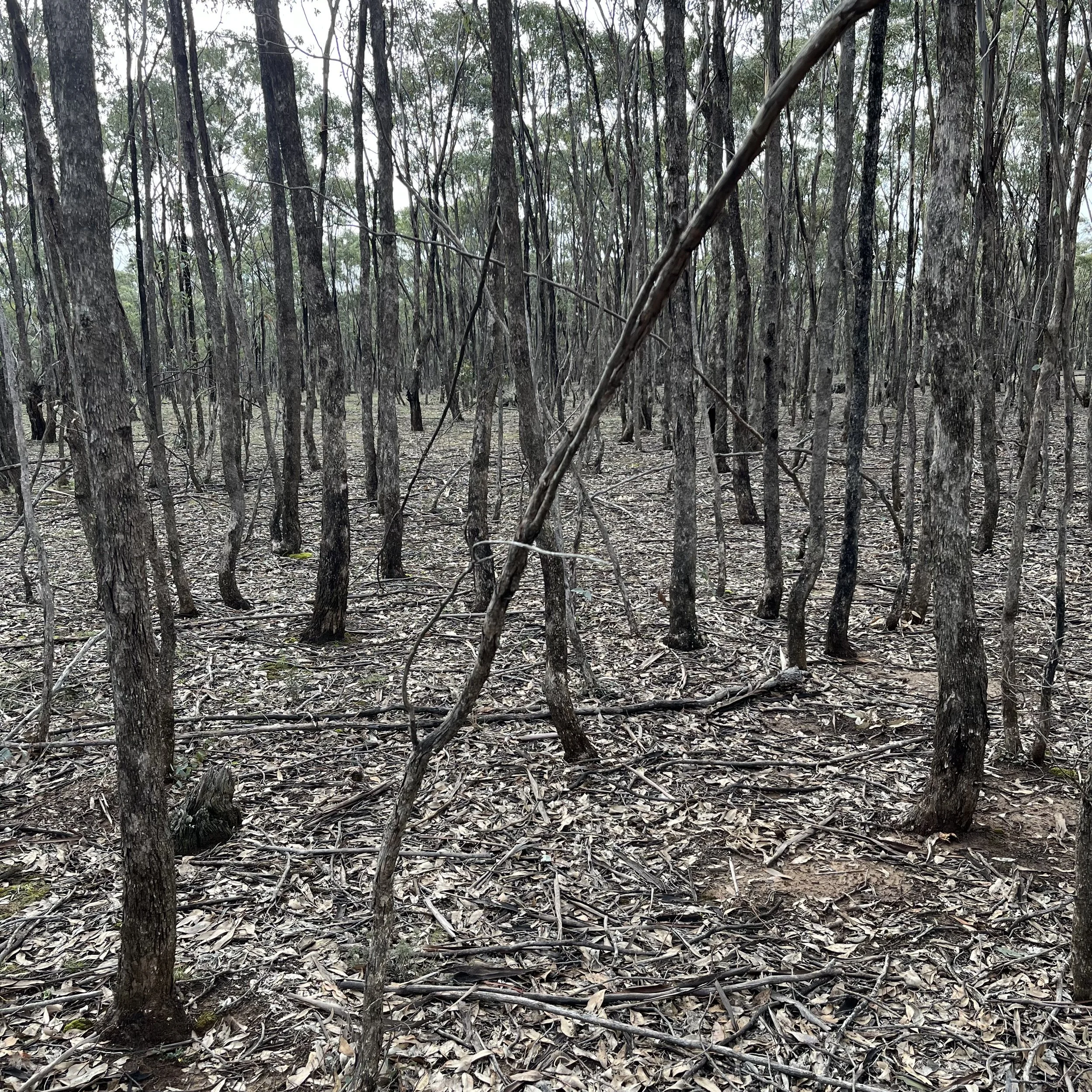
In areas where large numbers of similar aged trees have regenerated, competition for light, water and nutrients can restrict the development of larger healthier trees.
Carefully selecting which trees are retained allows remaining vegetation more opportunity to mature and develop habitat features sooner, rather than relying solely on natural competition and mortality within the stand.
Work can be tailored to the condition of each site, with consideration given to existing habitat, native understory, tree health and the long term objectives for the land.
What ecological thinning can achieve
Ecological thinning can help reduce competition between closely spaced trees, allowing selected trees greater access to light, water and nutrients and providing better conditions for them to develop into larger mature trees much faster than would occur naturally.
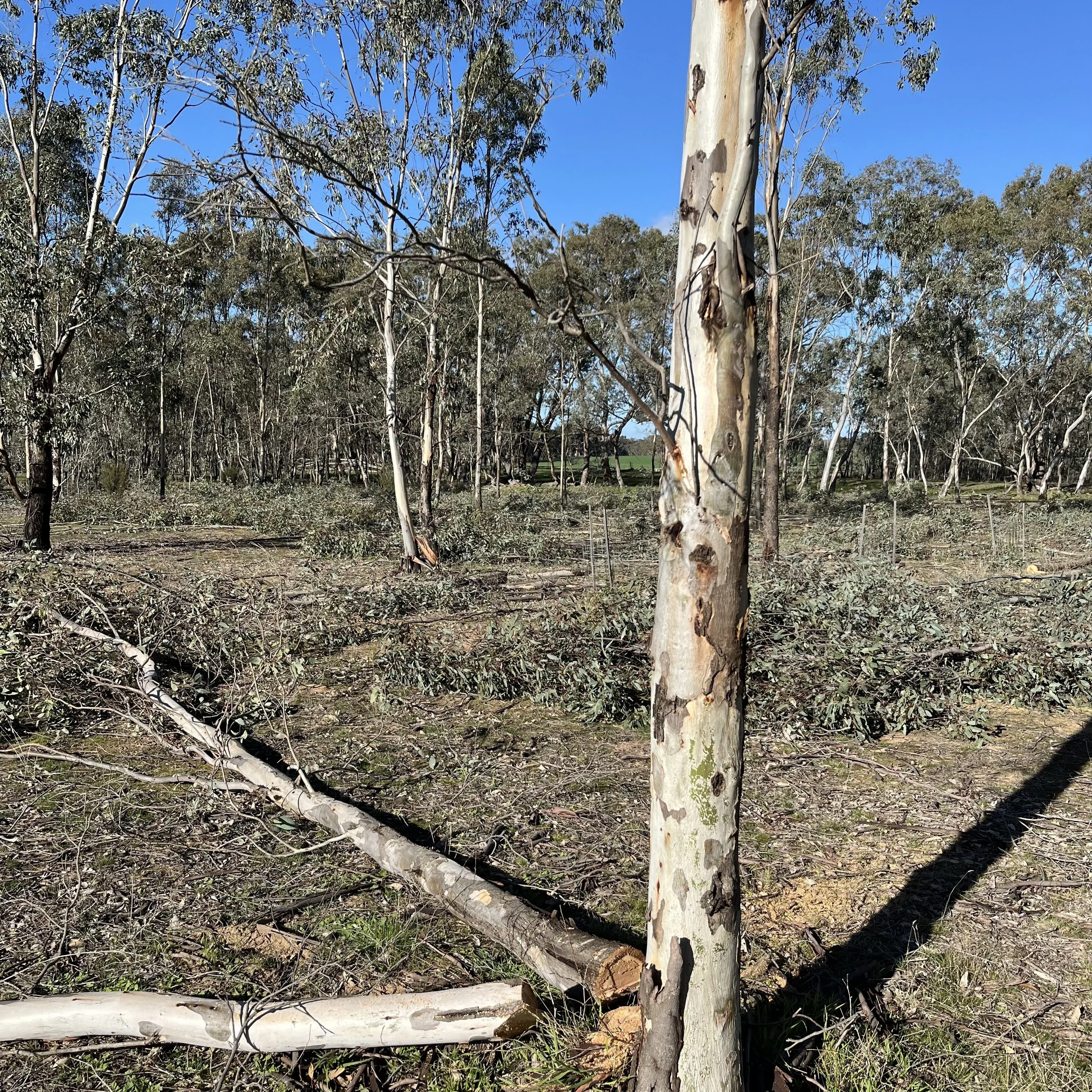
Thinning can also create greater variation in woodland structure, retain important habitat trees and allow more light to reach the understory. The aim is not simply to remove trees, but to make deliberate decisions about which trees should remain and why.
Removed material can be retained on site where appropriate to provide ground habitat, assist with erosion control and return organic material to the soil, consolidated into designated areas, or removed from site where access, fuel loads or other objectives need to be considered.
Management of cut material can also contribute to reducing fuel loads, while balancing habitat values and the objectives of the property.